

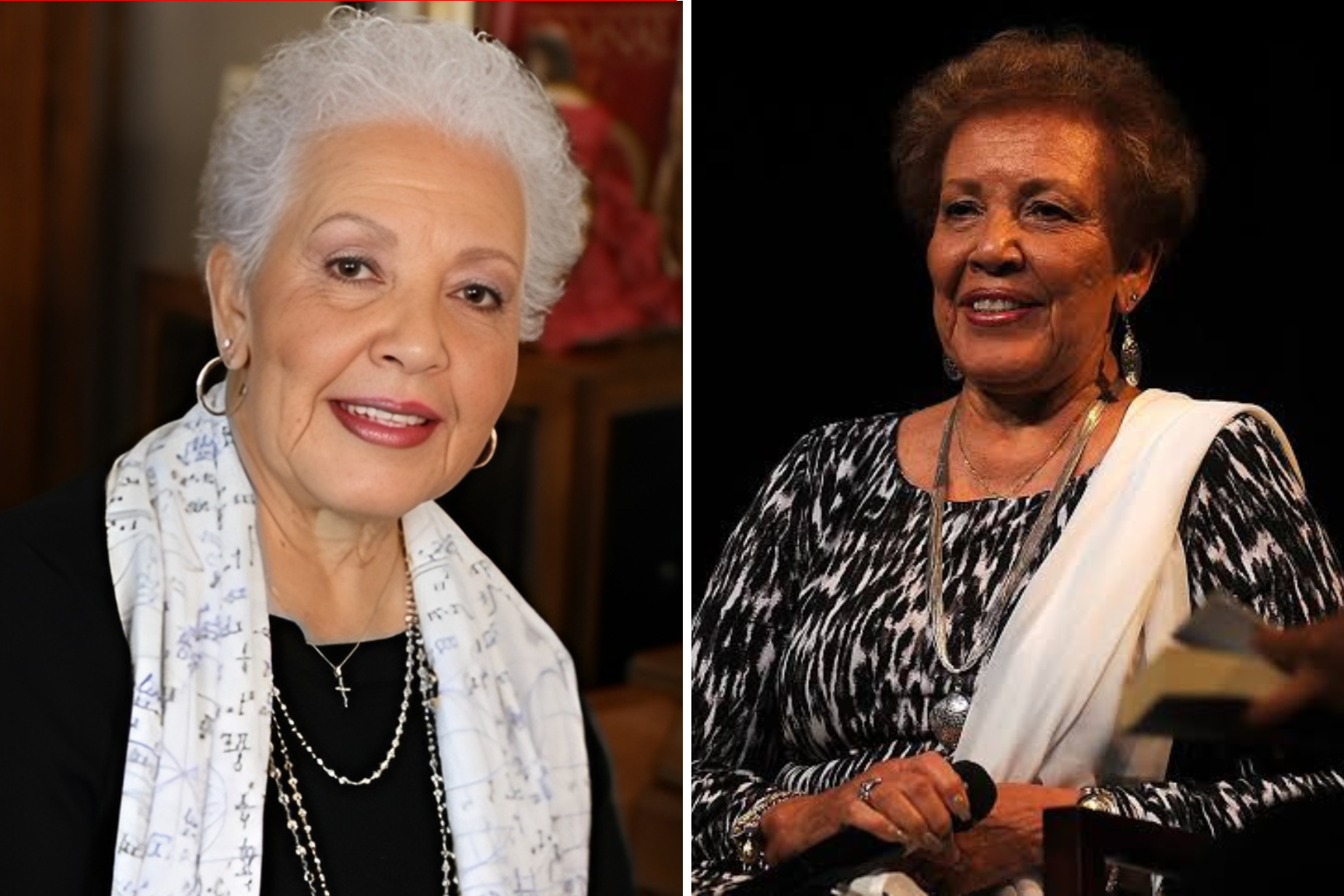
Joylette Goble Hylick is a mathematician who spent decades at NASA’s Langley Research Center in Hampton, Virginia, later worked as a Senior Requirements Engineer at Lockheed Martin, and is the eldest of the three daughters of NASA mathematician Katherine Johnson, the trailblazer behind Hidden Figures.
Long before the world knew her mother’s name, Hylick grew up in a house where numbers were simply how the day got done. In her own memoir, Katherine Johnson described never letting her daughters call math — or anything else — difficult; she believed children struggled with the subject only because a parent or teacher had told them it was hard. So she built arithmetic into ordinary life: counting the stars over the yard, adding up license plates on long drives, halving a recipe at the kitchen counter. It wasn’t a lesson. It was just Tuesday.
That household produced a working mathematician in its own right, not only a famous one. Katherine Johnson’s calculations guided America’s first astronauts into orbit and to the moon; her eldest daughter built a separate, decades-long technical career of her own — one that started at Hampton University and ran through NASA Langley and Lockheed Martin, long before Hidden Figures made the family name known to the world.
Inheriting the Equations at Hampton University
Hylick graduated from Hampton University with a degree in mathematics and started work at NASA that same year, 1962 — more than five decades before the world would come to know her mother’s name through Hidden Figures and a Presidential Medal of Freedom. At the time, Katherine Johnson was simply a NASA mathematician nearly a decade into her own career at Langley; none of the honors that made her a household name had happened yet.
Hylick later added a master’s degree from Drexel University, extending her formal education past pure mathematics and into the kind of structured, systems-level thinking that would eventually define her Lockheed Martin career.
It would be easy to flatten her story into “the daughter followed her mother into math.” The record supports something more specific. Katherine Johnson’s signature work was orbital mechanics — hand calculations precise enough that astronaut John Glenn asked for them by name before he’d trust an electronic computer over them. Hylick’s path also ran through NASA mathematics, but it continued into systems and requirements work at Lockheed Martin, a related but distinct technical discipline. A household can hand down curiosity and rigor without handing down a job description.
The Unspoken Pioneer: Joylette’s Long Career in NASA’s Technical World
Hylick’s NASA career unfolded inside the same institution that made her mother famous, but the overlap is institutional, not professional — nothing in the public record puts her on the same assignments, the same trajectories, or in the same meetings as her mother. Langley employed thousands of engineers and mathematicians across the decades Hylick worked there; sharing a building is not the same as sharing a mission.
Did Joylette Hylick Work at NASA?
Yes. Published accounts of her career describe her working as a mathematician at NASA’s Langley Research Center, the same Hampton, Virginia campus where her mother spent 33 years, starting not long after her 1962 graduation from Hampton University.
What Did She Do After NASA?
She moved into the private sector, taking a position at Lockheed Martin as a Senior Requirements Engineer before retiring. Requirements engineering is the unglamorous discipline that keeps complex systems from falling apart: defining precisely what a system has to do, translating that into specifications engineers can actually build against, and verifying that what gets built matches the original ask. It rewards the same close, structured thinking mathematics does — just pointed at systems instead of equations.
None of this made Hylick a public figure, and her career isn’t the one Hidden Figures tells. That’s not a verdict on its substance. Most pioneering technical careers don’t come with a movie attached, and the ones that don’t are not smaller for it — just quieter, and considerably harder to find in the public record.
The Factual Anchor
| Profile marker | Evidence-led summary |
| Full name used publicly | Joylette Goble Hylick (born Joylette Goble) |
| Family | Eldest of Katherine Johnson’s three daughters, with sister Katherine “Kathy” Goble Moore and the late Constance Goble Garcia |
| Education | B.S. in Mathematics, Hampton University (1962); master’s degree, Drexel University |
| NASA career | Mathematician, NASA Langley Research Center, Hampton, Virginia |
| Later career | Senior Requirements Engineer, Lockheed Martin, before retiring |
| Residence | Mount Laurel, New Jersey |
| Co-authored books | My Remarkable Journey: A Memoir (2021); One Step Further: My Story of Math, the Moon, and a Lifelong Mission (2021) |
Accuracy note: This table leaves out an unverified birth date, a specific Drexel graduation year, and project-level NASA assignments — the public record doesn’t firmly establish them, and none is necessary to take the career seriously.
Guarding the Flame of the Hidden Figures Legacy
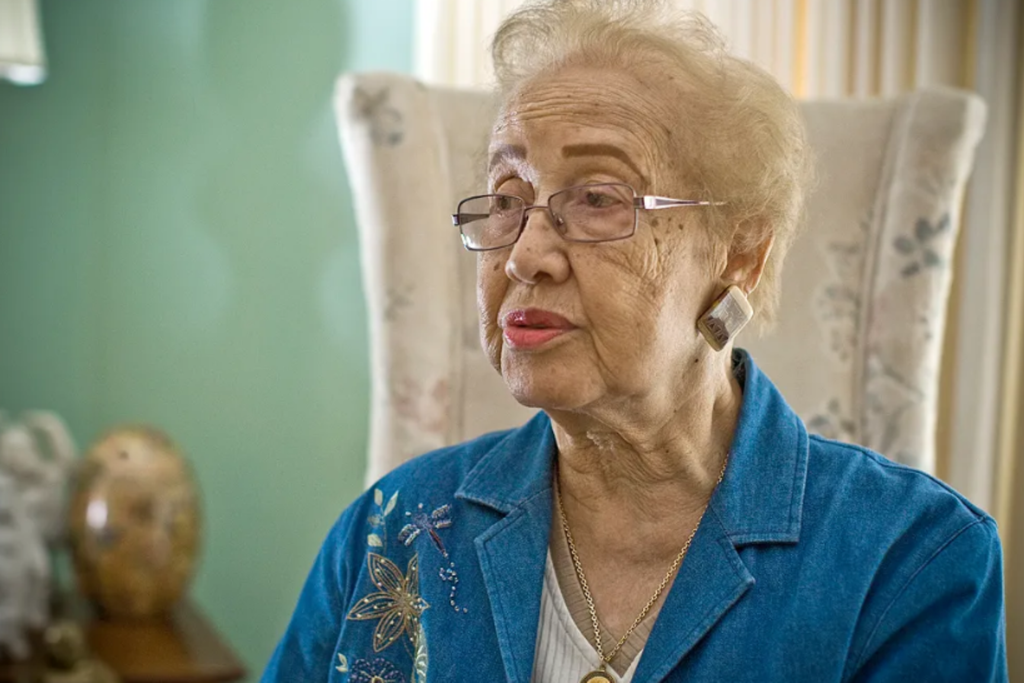
Katherine Johnson died on February 24, 2020, at 101. What followed was less a single tribute than a years-long project, carried out largely by her daughters, to keep the record of her life accurate and complete — not just the trajectory calculations, but the person who made them.
What Books Did She Help Write?
Hylick co-wrote two books with her mother and sister Katherine Moore, both published in 2021. My Remarkable Journey: A Memoir (HarperCollins, written with Lisa Frazier Page) is Katherine Johnson’s own account of her life, from child prodigy in the Allegheny Mountains of West Virginia to NASA’s most trusted hand-calculator, with her daughters filling in family history around her words. One Step Further: My Story of Math, the Moon, and a Lifelong Mission, released that January by National Geographic Kids, retells the same story for readers aged four to eight, built from family photographs and the daughters’ own memories.
The two books do different jobs. A memoir can hold complexity and full sentences; a 48-page picture book has to get its shape right the first time, for readers meeting this history with no context at all. Between a memoir and a picture book, mother and daughters covered both ends of that job.
Hylick has also spent years representing her mother in person, at ceremonies and in classrooms. She was there in November 2015 when Barack Obama presented the Presidential Medal of Freedom at the White House — “We’re going to get Mama to the ceremony, if it kills us,” she told a reporter beforehand, after her family spent three weeks sworn to secrecy about the honor. She was there again in 2017, when NASA Langley dedicated its new Katherine G. Johnson Computational Research Facility; her mother, she later recalled, would rather it had been named for the whole team. And when IEEE presented its President’s Award for her mother’s Apollo 11 work in May 2019, it was Hylick and her sister who accepted it on stage in San Diego.
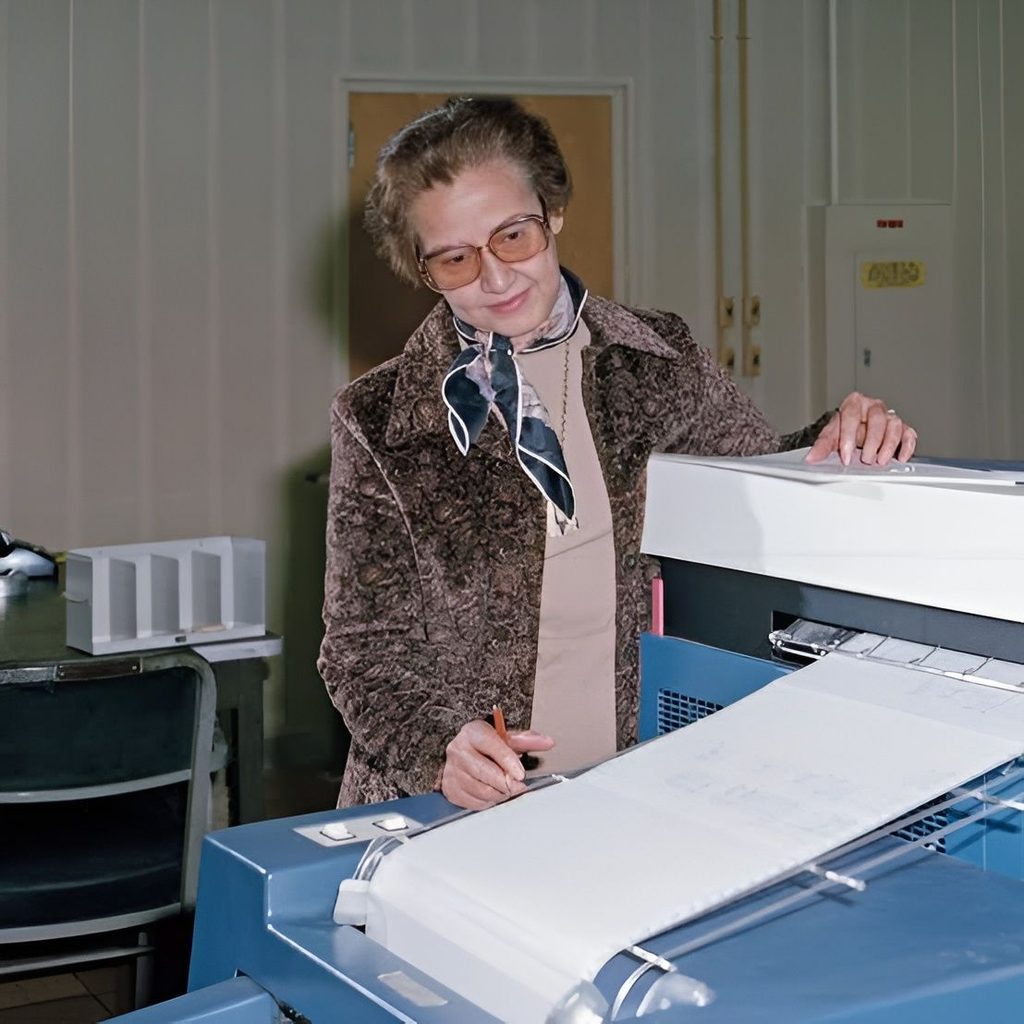
That pattern continued after the world moved on from the movie. In May 2021, speaking to roughly eighty people over Zoom for the Burlington County Library System, Hylick read passages from My Remarkable Journey and described a mother who, she said, remained to the end “funny, pleasant, bright, thoughtful and humble.”
A Lifelong Blueprint for Women in STEM
Is Her Significance Limited to Being Katherine Johnson’s Daughter?
No — though the honest answer has two parts. Hylick’s own career, in mathematics and then in requirements engineering, stands on its own record: a Hampton degree, a Drexel master’s, a NASA career, a Lockheed Martin title, all accumulated years before anyone outside her family had heard of Hidden Figures. That isn’t inherited significance. It’s a résumé.
The second part is that she has also taken on something her mother never had to: keeping the story straight for people who weren’t there. Katherine Johnson did the math. Joylette Hylick, decades later, is one of the people making sure the math — and the woman behind it — doesn’t get flattened into a single movie scene.
Visibility was never evenly distributed between the two careers. One woman’s calculations are permanently attached to Apollo 11; the other’s shows up mostly in library-event write-ups and school visits. That gap says something about what becomes famous and what doesn’t. It says nothing about which career mattered less.
On February 11, 2026, that second role brought Hylick to Moorestown High School in New Jersey, where the Young Historians Club had organized a Hidden Figures screening for Black History Month. She described her mother to the students the way she usually does — humble, funny, sharp, generous — and when asked what she’d want them to take from the film, she didn’t reach for trajectories or Apollo. “Be determined, be disciplined, enjoy what you do, but always want to learn,” she told them.
It’s a modest piece of advice for a roomful of teenagers during Black History Month. It is also, more or less, what Katherine Johnson built into her own daughters’ lives six decades earlier — counting stars, adding license plates, never once allowing the word hard. The equations belonged to one generation. The habit of curiosity behind them is Joylette Goble Hylick’s to pass on, and by all accounts, she’s still doing exactly that.