

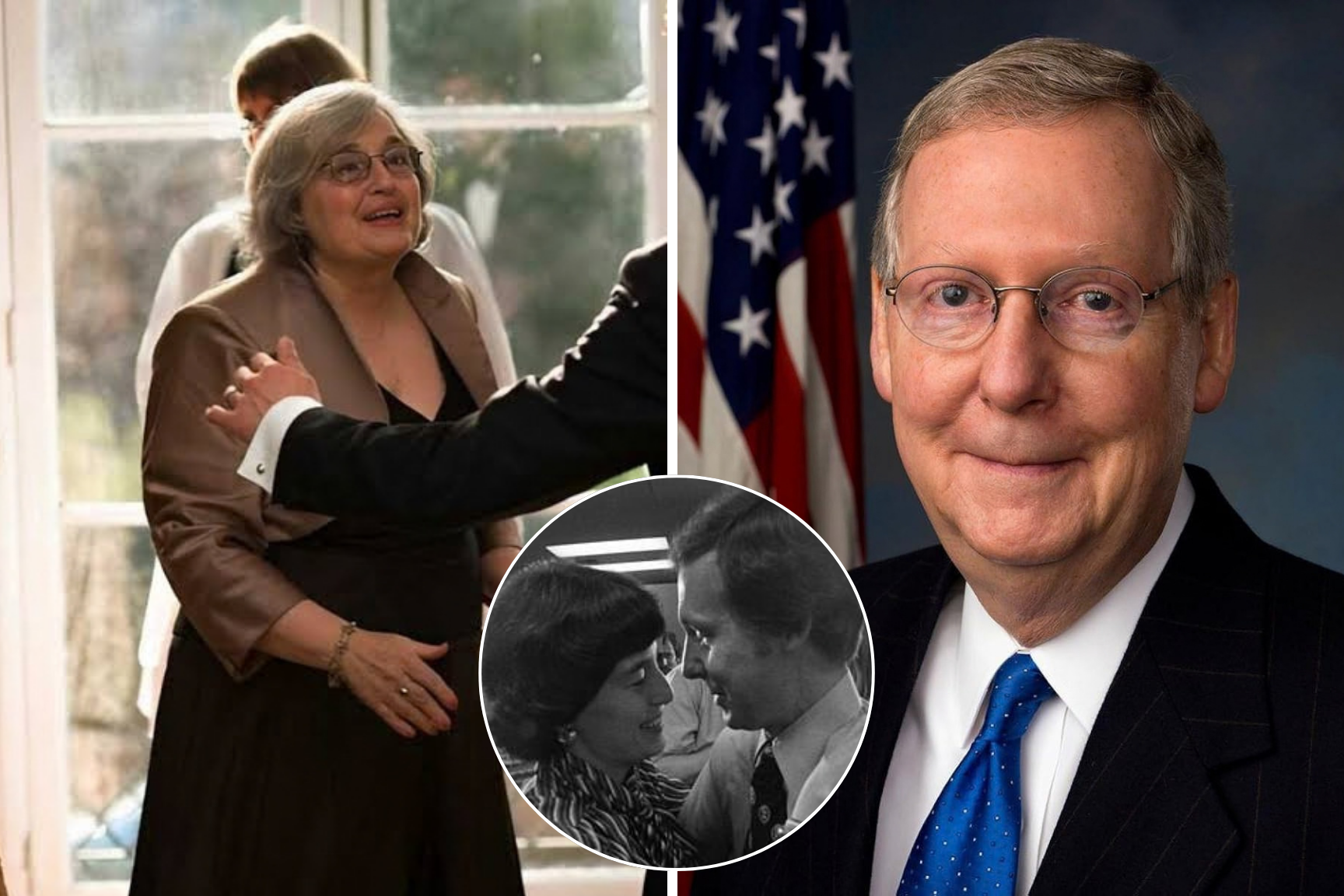
- The Woman in the Political Footnotes Who Started Preserving History
- The Paper Trail: What the Primary Sources Actually Reveal
- The Behind-the-Scenes Crew: The Feminist Network Around Sherrill Redmon
- The Redmon Effect: Rewriting Who Gets Remembered in American Feminist History
- Trivia & Underground Facts: The Details Most Biographies Skip
- Fast Facts Archive
The Woman in the Political Footnotes Who Started Preserving History
Search her name and you get a marriage. Open the archive and you get a career.
Same woman. Two very different files.
The first file says Sherrill Redmon was Mitch McConnell’s first wife. According to Britannica’s entry on McConnell, the marriage ran from 1968–80. Page after page of “who is” bios repeats it, mostly by copying each other.
The second file sits in Northampton, Massachusetts. According to the Sophia Smith Collection’s event page, Smith College held a celebration in her honor on February 3, 2013, marking her work as director of the Sophia Smith Collection, a post she held from 1993 to 2012. Smith’s 2007 press release calls the collection the nation’s oldest women’s history archive.
One file is about who she married. The other is about what she kept from disappearing.
Here is the plot twist the headline promises: a dramatic conversion. The record doesn’t deliver one. It delivers a thirteen-year gap. The marriage ends in 1980. The directorship begins in 1993. In between, the documented trail goes quiet.
“Radical” is the headline’s word, not Smith’s. The institution’s own wording is plainer: bring race, class and sexual diversity into the collection. Whether that counts as radical depends on what you think an archive is for.
So the paradox isn’t really Redmon. It’s how we file women: under the famous man nearest to them, unless someone preserves the evidence of what they did.
She spent nearly two decades running the place that preserves it.
Which raises the question this story turns on. What does her own recorded account say that the political-family narrative misses?
There is a recording. It runs eight minutes.
The Paper Trail: What the Primary Sources Actually Reveal
Three kinds of records carry this story: institutional pages, catalog entries and recordings. Each proves something different. Start with the one that has her voice.
Start With Her Own Voice: The 2017 Oral History
The University of Houston Libraries hold a recorded interview with Sherrill Redmon, dated November 6, 2017, according to the library’s Audio/Video Repository catalog. It runs 8 minutes, 3 seconds.
It was recorded in Houston, Texas, as part of Gloria Steinem’s Sharing Stories Challenge, during the conference “National Women’s Conference: Taking 1977 Into The 21st Century.” The recording lives in the library’s Special Collections, within the Carey C. Shuart Women’s Research Collection. It is open to the public for educational use.
The catalog pulls out one segment: “Personal history and marriage to Mitch McConnell,” 3 minutes, 24 seconds.
Read the cataloger’s tags and the shape of the interview shows. Smith College. Campaigning. Motherhood. Academia. Archives. Gloria Steinem. The torch relay. Politics and archives sit in the same list.
Here is what the record establishes: Redmon told her own story, on the record, in 2017, for a Steinem-led project. Here is what it doesn’t: what she said, or why. The catalog offers tags, not a transcript, and this article won’t invent either.
The Career Shift: From Political Association to Archival Leadership
Three rules keep the timeline honest.
- Documented dates: Britannica for the marriage (1968–80). Smith College for the directorship (1993–2012).
- Redmon’s own words: the 2017 interview and her remarks quoted in Smith’s publications.
- Interpretation: flagged as interpretation, every time.
Under those rules the chronology is short. The marriage ends in 1980. The directorship starts in 1993. Nothing sourced fills the years between.
Some sites say she joined Smith in 1983 and led the collection by 1985. Smith’s own event page dates her directorship to 1993. Go with Smith.
Two more guardrails. Marriage to a politician doesn’t mean she worked in Washington. And the divorce doesn’t explain the career. No source says either.
What did directing the collection involve? Smith’s own pages give the documented answer, one moment at a time.
- 2002: She explained how the collection builds exhibitions.
- 2006: She described helping a journalist build a feminist directory.
- 2007: She introduced panels on YWCA history.
- 2009: A writer described her collecting philosophy.
Interpretation: read together, those moments describe someone who treated an archive as an active project, not a storage unit.
What the Archives Can Prove—and What They Cannot
Institutional pages prove titles and dates. Catalog entries prove a recording exists. Oral histories prove what someone chose to say. None of them proves motive.
That’s why this piece skips the usual moves. It doesn’t claim the divorce caused the scholarship. It doesn’t offer a reason the marriage ended. It doesn’t print a birth date, a hometown or a net worth.
It also leaves out claims that circulate without sources: a “first director” title (Smith dates the collection to 1942), a mid-1980s directorship, a shelf of awards and lifestyle details. None is supported by Smith’s own pages.
The work was never solo, though. Archives run on networks.
The Behind-the-Scenes Crew: The Feminist Network Around Sherrill Redmon
Archives are group projects. This one has names.
Gloria Steinem: The Connection Between Oral History and Public Memory
Gloria Steinem, Smith class of 1956, donated her papers to the Sophia Smith Collection. In its Spring 2003 NewsSmith, Smith counted 237 boxes spanning 1940 to 2000.
Her link to Redmon’s work is institutional and documented. According to Smith’s project page for Voices of Feminism, the Ford-funded project included collaborating with Steinem as she worked in her own papers and identified potential donors.
The paper trail around the two women:
- September 2007: Steinem is the featured speaker at the collection’s 65th-anniversary conference, according to the Sophia Smith Collection’s conference page.
- October 21, 2009: According to writer Kate Kelly’s report on America Comes Alive, a New York fundraiser marks Steinem’s 75th birthday and her papers’ donation. Smith president Carol Christ interviews her.
- February 3, 2013: Steinem gives the keynote at Redmon’s celebration.
- November 6, 2017: Steinem’s Sharing Stories Challenge records Redmon.
Writer Kate Kelly’s report on the 2009 event relays Steinem’s logic: archives fuel activism, because people repeat what they can see. Steinem also urges groups to donate their papers, Kelly writes, and many are astonished that anyone would archive them.
That is the link between oral history and public memory. Experiences that never made the political record get a second shot.
What the records don’t show: a private friendship, or Steinem steering Redmon’s career. No source claims either.
Joyce Follet: The Collaborative Work Behind the Archive
Joyce Follet directed the Voices of Feminism oral-history project for the Smith College Archives, according to Smith.
Her fingerprints are all over the record. She co-produced, wrote and directed Creating Women’s History, a 2001 documentary about the collection, with Terry Kay Rockefeller. She gave the project overview at the 2007 conference. She introduced the “Activists and Archives” program at Redmon’s 2013 celebration.
And she and Redmon worked as a pair. According to the Smith Quarterly’s September 2023 profile of Loretta Ross, the two interviewed Byllye Avery, founder of the National Black Women’s Health Project.
The practical work behind that sentence is unglamorous: setting up interviews, asking for papers, promising access, earning trust.
Loretta Ross and Byllye Avery: When the Archive Opens Another Door
One interview led to another, and the sequence is documented.
- Step 1: Redmon, then director of the collection, and Follet interviewed Byllye Avery.
- Step 2: Avery suggested they also interview Loretta Ross.
- Step 3: Follet asked Ross to take part and to donate her papers. Ross hesitated. She feared losing access to her own papers.
- Step 4: Redmon and Follet assured her the papers would be digitized and that she would have full access.
- Step 5: Ross donated most of her materials and sat for an interview that produced a 364-page document with a companion video.
Ross wasn’t a side character in someone else’s story. She is one of the 12 Black women who coined “reproductive justice,” per Smith, and a 2022 MacArthur Fellow.
She is also now a Smith professor. Smith’s account calls that the culmination of a relationship that began outside academia.
The Invisible Crew: Donors, Researchers, and Archivists
The rest of the crew rarely makes a headline. The record names them anyway.
- Maida Goodwin, a collection staff member, proposed and arranged the 2002 all-photograph exhibition, according to Smith’s April 25, 2002 AcaMedia newsletter.
- Barbara J. Love edited Feminists Who Changed America, 1963–75, a directory of 2,220 profiles. Redmon said Love consulted the collection at every stage. Love was also a Voices of Feminism narrator.
- Jack Smith (1941–2000) chose the collection as the home for the Population and Reproductive Health Oral History Project, after discussions with Redmon, according to the project’s page on Smith’s library site. He died in October 2000.
- Deborah R. McFarlane carried that project forward and presented it at the 2007 conference.
- Kathryn Kish Sklar is the name attached to the Living U.S. Women’s History Oral History Project in the 2007 program. Redmon presented it on her behalf.
- Evelyn C. White conducted Steinem’s own Voices of Feminism interview in September 2007.
- Mary Ritter Beard and Margaret Storrs Grierson founded the collection in 1942.
Who shows up in a history, and who doesn’t, gets decided by lists like this one.
So what changes when these collaborations determine which lives future historians can actually study?
The Redmon Effect: Rewriting Who Gets Remembered in American Feminist History
The verifiable Redmon Effect isn’t a law or a policy change. It’s a collecting strategy, and it left a record.
The documented features belong to the collection and its projects. Nothing here claims Redmon personally created every piece.
From Private Experience to Historical Evidence
An oral history turns memory into a source. A donated paper trail turns private life into evidence. Together they widen what a historian can use.
The Voices of Feminism project shows how that works at scale.
- Funding: Smith’s Spring 2003 NewsSmith reported that the Ford Foundation gave a two-year grant of $259,066 in September 2002. Smith’s project page says the project was funded from 2002 to 2008.
- Narrators: labor, peace and anti-racism activists; artists and writers; lesbian rights advocates; anti-violence and anti-poverty organizers; and women of color reproductive justice leaders.
- Length: Smith’s Steinem research guide says interviews average five to six hours and cover childhood, personal life and political work.
- Scale: Smith’s October 2008 alumnae e-news says more than fifty women had shared their life stories in the project.
- The file: recorded interviews, transcripts, correspondence between interviewer and narrator, and biographical surveys.
Each narrator’s listing also notes whether she is placing her papers in the collection.
The Loretta Ross Example: A Concrete Measure of Archival Impact
The Ross story is the clearest measurable outcome in the record, and it carries more weight than any adjective.
Start with the paper trail. Smith holds a 364-page transcript, a companion video and most of Ross’s papers. Ross sat on the narrators’ panel at the September 2007 conference. She was on the panel at Redmon’s 2013 celebration.
Then look at the human side. Ross hesitated, got a promise about digitization and access, and signed on. Years later she became a Smith professor.
That is what access to personal papers and recorded testimony does. It lets researchers rebuild a movement from the inside.
Whose History Was Missing From the Traditional Record?
The collection began as a fix for an absence. Kate Kelly’s 2009 account on America Comes Alive says historian Mary Ritter Beard noticed in the 1930s that women were missing from history books. Smith’s 2007 press release dates the collection’s founding to 1942.
The Ford-funded project aimed to find papers and records from women of color, grassroots organizers and others “marginalized in traditional historical accounts.”
Smith’s Steinem research guide shows what that looks like in the stacks. It lists, among others, the papers of Marcia Ann Gillespie, Aileen C. Hernandez, Dorothy Pitman Hughes and Mary Daly, and the records of the Women’s Action Alliance. An online Smith exhibit adds the National Congress of Neighborhood Women.
A caution: those pages don’t say when each collection arrived. Nothing ties them to Redmon’s tenure by date, so none is credited to her.
What the sources do credit her with is a philosophy. Kelly describes Redmon as a believer in “aggressive collecting,” reasoning that if you wait for donations, mostly wealthy donors send papers.
Interpretation: collecting is a decision about who counts as source material. That is a documented institutional priority, not a claim that Redmon alone reshaped American feminism.
The Legacy Test: What Remains After the Director Leaves?
The timeline is clear: 1993 to 2012. The legacy has to be judged by what the collection holds and who can use it.
- 2007: Smith’s press release says the collection had grown to 575 collections in 9,000 square feet.
- 2013: Smith celebrated her work with Steinem, Ross and Alison Bechdel on the program.
- 2026: Smith’s research guide to its Steinem-related collections was updated in September.
- 2023: Ross, whose papers came through the archive, is a tenured Smith professor, per Smith’s 2023 profile.
So ask the legacy question the way an archivist would. What was collected? Whose records are preserved? Who can read them next year?
That takes us back to the paradox. A repeated label says she was a politician’s wife. A documented record says she spent nineteen years deciding which women’s lives would be kept.
Trivia & Underground Facts: The Details Most Biographies Skip
Unusual, verifiable, and not one of them is gossip.
Her Own Recorded Interview Is Only Eight Minutes Long
The University of Houston Libraries’ catalog lists the interview at 8 minutes, 3 seconds. The marriage segment runs 3 minutes, 24 seconds, a bit more than two-fifths of it.
The record sits in the library’s “Share Your Stories From ’77” collection under an educational-use rights statement.
The catch: a short, accessible recording is valuable, but it isn’t an autobiography.
Smith College Celebrated Her Work Before the Story Became a Biography Trend
According to the Sophia Smith Collection’s event page, Smith held the celebration on February 3, 2013, under the title “An Activist Archives.” It marked the collection at 70 and honored her directorship, 1993–2012.
The program ran in two parts.
- A conversation with Alison Bechdel titled “In the Archives of Fun Home.”
- “Activists and Archives: Allies for Social Justice,” introduced by Joyce Follet, with a keynote by Steinem and a panel of Loretta Ross, Anna Holley, Katsi Cook and Marianne Bullock, moderated by Jennifer Guglielmo.
Carol Christ, Kelly Anderson and Susan Van Dyne introduced the Bechdel session.
That is institutional proof of her standing, years before a wave of “Mitch McConnell’s first wife” profiles.
She Contributed to a Living U.S. Women’s History Project
According to the program for Smith’s September 28–29, 2007 conference, Redmon presented the Living U.S. Women’s History Oral History Project on behalf of Kathryn Kish Sklar.
She also introduced the YWCA panel and the musician Margie Adam, and she presented other new additions to the collection.
The record doesn’t spell out the project’s output or her exact duties on it, so this article doesn’t either.
The Archive Preserves More Than Finished Stories
Behind every interview sits a stack of supporting paper. The Voices of Feminism files include transcripts, correspondence between interviewer and narrator, and biographical surveys.
Other numbers show the scale of the stacks.
- The Population and Reproductive Health project spans about 40 interviews in 61 boxes (24.75 linear feet), according to the SNAC archival record.
- Steinem’s papers ran to 237 boxes in 2003.
- The 2002 photo exhibition showed 166 images, some from the 1840s.
These are collection-level facts, not Redmon’s personal output.
The 2002 exhibition’s own introduction called the display the tip of an iceberg. Most of the collection stays in the stacks.
The “Secret” Is What Public Biographies Leave Out
Celebrity-style bios repeat the same personal details: birth dates, net-worth estimates, motive stories and lifestyle claims. None of them cites a source, so none is repeated here.
What they skip is the paper trail: a grant, a documentary, a conference program, a 364-page interview.
The most interesting hidden detail may not be a secret at all. It may be the scale of the work.
Fast Facts Archive
- Name: Sherrill Redmon.
- Public association: Married to Mitch McConnell, 1968–80 (Britannica).
- Documented role: Director of the Sophia Smith Collection, Smith College, 1993–2012.
- Professional focus: Women’s history, archival preservation and oral history.
- Recorded interview: University of Houston Libraries, November 6, 2017 (8:03).
- Documented collaborators: Gloria Steinem, Joyce Follet, Barbara J. Love, Jack Smith, Deborah R. McFarlane, Maida Goodwin.
- Archival example: Byllye Avery, then Loretta Ross, then a 364-page interview.
- Institutional milestone: Celebration of the Sophia Smith Collection at 70, February 3, 2013.
- Unverified: birth date, hometown, education, honors, 1980–93 activities, reasons for the divorce.
- Verification note: Smith’s finding-aid pages could not be read by automated tools, so this article relies on Smith’s news, event, research-guide and press pages, cited in the text.