


Peter Orszag, 57, is the CEO and Chairman of Lazard and a former Obama administration cabinet official who ran the White House budget office. Born December 16, 1968, he moved from academic economics to the Congressional Budget Office, then the Office of Management and Budget, then Citigroup and Lazard. His exact net worth is not publicly established. The disclosed figures appear below, separated by what they actually measure.
The Intellectual Foundation: From Princeton to the London School of Economics
The Federal Reserve Question That Foreshadowed His Career
Orszag’s Princeton senior thesis was Congressional Oversight of the Federal Reserve: Empirical and Theoretical Perspectives. The topic sits where institutional accountability, monetary governance, and the pull between technical expertise and political decision-making meet. It did not predict his career, but it shows the questions he kept returning to. Academic research asks what the evidence shows. Setting federal spending priorities, or advising a corporate board, asks what to do under constraints.
Princeton, the Marshall Scholarship, and London School of Economics
Orszag attended Phillips Exeter Academy from 1985 to 1987 and graduated with high honors. At Princeton he earned an A.B. in economics, summa cum laude, in 1991. A Marshall Scholarship then took him to the London School of Economics, where he earned an M.Sc. and a Ph.D. in economics, completed in 1997. The credentials span economic theory, public institutions, and empirical policy analysis. They show preparation, not proof of leadership ability.
From Economic Research to Policy Design
His research interests ran toward budgets, public finance, health economics, and long-term fiscal pressure. He took economic-policy roles in the Clinton administration, including work connected with the Council of Economic Advisers. He also led the Hamilton Project at Brookings, a research initiative built to turn economic analysis into policy proposals. Papers published under that banner came from many contributors, so they should not be read as his sole work. The exact titles, co-authors, and dates of his publications need checking against institutional bibliographies before anyone cites them individually.
Guarding the Federal Ledger: The White House Years
The Congressional Budget Office: Measuring the Fiscal Choices
Orszag directed the CBO from 2007 to 2008. The office produces budget estimates, scores legislation, and tells Congress what its choices will cost. His tenure ran into the financial crisis, when baselines and cost estimates mattered more as the economic outlook worsened. Specific assessments from his tenure are in the CBO’s archived publications.
The Obama Administration: From Budget Analysis to Executive Responsibility
In 2009 he became the 37th director of the Office of Management and Budget under President Barack Obama and served until 2010. The CBO gives Congress independent analysis. OMB coordinates the president’s budget and manages the executive branch. His work covered the budget response to the post-crisis economy, including recovery spending, health-care costs, deficits, and longer-term fiscal priorities. He was one voice among many in those decisions, and he did not design or control every economic policy of the administration.
What Changed Between the CBO and the White House?
Three contrasts define the move. At the CBO he forecast. At OMB he executed. At the CBO his numbers informed choices made by others. At OMB he helped make the trade-offs, within a political system where elected officials decide. At both, he had to weigh immediate recovery against long-term sustainability.
The Factual Anchor Grid
| Profile Metric | Verified Detail |
| Full legal name | Peter Richard Orszag |
| Exact age in 2026 | 57 on October 20, 2026; turns 58 on December 16, 2026 |
| Current title | CEO and Chairman of Lazard |
| Key government posts | Director, Congressional Budget Office (2007–2008); Director, Office of Management and Budget (2009–2010) |
| Alma mater | Princeton University; London School of Economics; Phillips Exeter Academy |
| Undergraduate degree | A.B. in economics, summa cum laude, Princeton, 1991 |
| Doctoral credential | Ph.D. in economics, London School of Economics, 1997 |
| Nationality | American |
| Birthplace | Boston, Massachusetts |
Navigating Wall Street: The Ascent to Lazard’s Helm
Citigroup: Turning Policy Expertise into Financial Advisory Experience
After leaving the administration, Orszag joined Citigroup. From January 2011 to January 2016 he served as vice chairman of Corporate and Investment Banking and chairman of the Financial Strategy and Solutions Group. The job changed the question he answered. In government the client was the public. At Citigroup the clients were corporations, and the work turned on transactions, capital markets, and strategy. No specific deal should be credited to him without a reliable source naming his role.
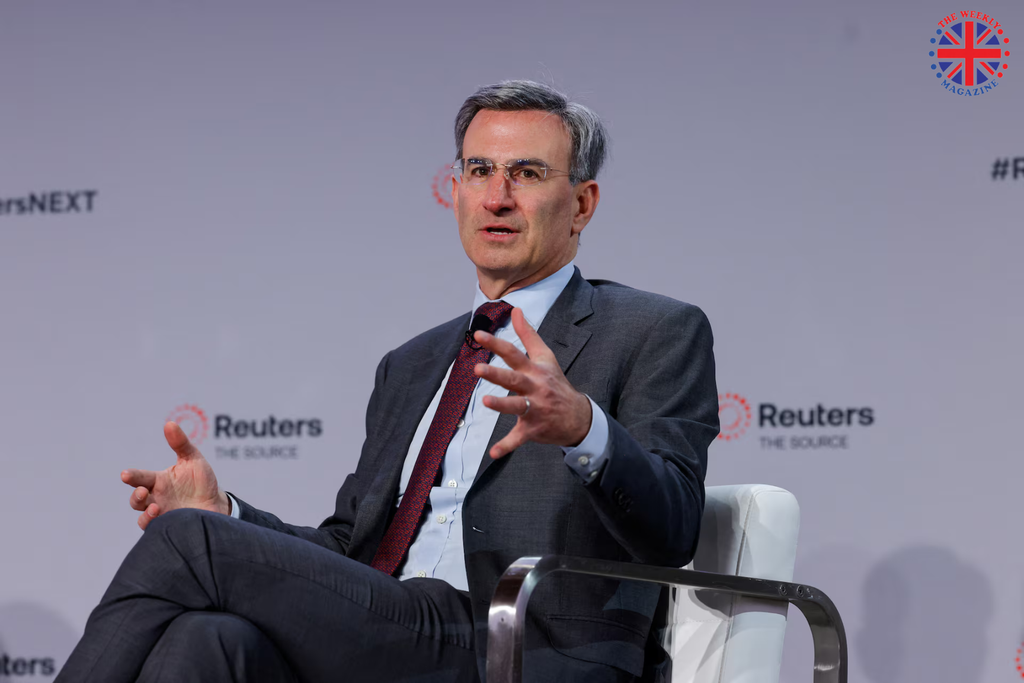
Lazard, 2016–2023: From Investment-Banking Leadership to Financial Advisory CEO
He joined Lazard in May 2016 as vice chairman of Investment Banking and a managing director. He later headed North American M&A and served as global co-head of healthcare. The appointment dates for those two roles still need confirmation. In 2019 he became CEO of Financial Advisory, running the firm’s core advisory business before taking on its wider leadership.
October 2023 and January 2025: The CEO-to-Chairman Transition
On October 1, 2023, Orszag became Lazard’s CEO, succeeding Kenneth M. Jacobs, and joined the board of directors. On January 1, 2025, he added the chairmanship while remaining CEO. Operating control and board leadership now sit with one executive. That concentrates accountability, though the titles alone prove nothing about financial or operational results.
Peter Orszag’s Net Worth: Separating Wealth from Compensation
Three different measures get blurred together in net-worth coverage, so they are kept apart here.
Compensation. The supplied dossier puts his 2025 total compensation at roughly $15 million, as disclosed in Lazard’s 2026 proxy statement. That breaks down as about $900,000 in base salary, $3.9 million in annual cash incentive, and $10.2 million in long-term incentive. Awarded amounts are not the same as cash received, and the proxy statement is the place to confirm both.
Equity. He holds roughly 260,942 shares of Lazard common stock, valued at about $9.0 million to $9.1 million between late August and October 2026. That is a dated snapshot. Share prices, vesting conditions, transactions, and taxes all move the figure.
Net worth. One disclosure-based estimate puts his wealth at no less than roughly $19.5 million as of August 26, 2026. Unofficial estimates run from $20 million to $30 million. Neither is a confirmed total. Household figures can include assets belonging to others, and estimates built on disclosed securities miss private holdings, debts, and tax obligations.
What His Corporate Ascent Says About the Public-to-Private Pipeline
Fiscal modeling, public-budget fluency, and strategic advice overlap, but they are not interchangeable. Reading federal budgets can sharpen an executive’s grasp of economic conditions without guaranteeing success in investment banking. Orszag’s path is a case study in senior economic policymakers moving into corporate advisory work. Judge it by appointments, responsibilities, and results, not by assumptions about personality.
Demographics, Marriage, and the Public Eye
How Old Is Peter Orszag in 2026?
Orszag is 57 as of October 20, 2026. He was born December 16, 1968, in Boston, Massachusetts, and turns 58 on December 16, 2026.
What Is Peter Orszag’s Current Job?
He is CEO and Chairman of Lazard. He became CEO on October 1, 2023, and chairman on January 1, 2025. The role is corporate and commercial, unlike his earlier federal posts at the CBO and OMB.
Who Is Peter Orszag’s Wife?
His wife is Bianna Golodryga, a CNN journalist who previously co-hosted ABC’s Good Morning America Weekend. According to the supplied dossier, they married on September 25, 2010, at Capitale in New York City. Her broadcasting career stands apart from his.
Does Peter Orszag Have Children?
Orszag and Golodryga have two children, son Jake Spencer Orszag and daughter Maia Isabel Orszag. The dossier also mentions children from prior relationships, but their number, relationships, and dates are not confirmed, so none are detailed here. Nothing further about the children’s private lives belongs in a business biography.
What Is Peter Orszag’s Educational Background?
He graduated from Phillips Exeter in 1987 with high honors, earned his Princeton economics degree summa cum laude in 1991, and studied at the London School of Economics on a Marshall Scholarship. His LSE Ph.D. in economics was completed in 1997.
What Is Peter Orszag’s Net Worth?
His exact net worth is not established by public disclosures. The cited disclosure-based estimate is at least about $19.5 million, against unofficial estimates of $20 million to $30 million. The roughly $15 million in 2025 compensation is annual pay, not a measure of wealth.
What Did Peter Orszag Do in the Obama Administration?
He directed the Office of Management and Budget from 2009 to 2010, managing the federal budget process and executive-branch budget operations. That differs from his earlier CBO directorship, which was independent analysis for Congress. Official budget documents and fiscal assessments from those years show his actual influence.
Is Peter Orszag on Any Boards or Associated with Economic Policy Institutions?
His one confirmed corporate board seat is Lazard’s, where he has served since October 2023. The OMB and CBO directorships were government appointments. His Council of Economic Advisers work dates to the Clinton administration, and his Hamilton Project leadership at Brookings is a past research role whose precise title and dates still need verification. The dossier does not establish a full list of current outside directorships.
The Anatomy of an Advisory Legacy
Two Systems, One Career: National Budgets and Corporate Strategy
In government, budget assumptions and fiscal estimates shape how public resources are allocated. In private advisory work, clients weigh strategy, transactions, restructuring, and capital allocation. Orszag has operated in both. What makes the career notable is that range, not the prestige of the titles.
The Standard Against Which His Legacy Should Be Judged
Three tests apply. First, institutional responsibility: what authority he held, and which decisions or assessments belong to him. Second, analytical contribution: which research, forecasts, policy initiatives, and advisory assignments can be verified. Third, leadership outcomes: what evidence exists on his performance in federal budget management and at Lazard.
He should not receive sole credit for national economic results or corporate deals where responsibility was shared. A former federal budget chief running a Wall Street advisory firm is not the point. His career spans one system built around allocating public resources and another built around strategic financial advice, and the quality of his judgment in both is the measure that matters.